To make up a bedtime story with your child, use five steps: pick a heroine, give her a wish, put one obstacle in her way, bring in a helper, and finish with a calm ending. Take turns, a sentence each, passing the story on with "and then…". With one obstacle, the story fits into about five minutes.
This guide is for parents who get asked for "one more story" after the books have run out. It builds on our five ready-made princess story starters. Here you get the method behind them, 20 new story cards to mix and match, and versions for ages 4 to 12. The age bands are our editorial suggestions; your child may fit a younger or older one.
The five steps: heroine, wish, obstacle, helper, ending
- Heroine. One name and one detail is enough: "Princess Wren, who collects buttons." The detail matters more than the crown, because you can use it later in the plot. Your child can invent her or borrow someone familiar from our princess book, such as Merida or Vasilisa the Wise.
- Wish. What does she want today? Keep it small and concrete: to find her kite, to bake a cake for the gardener, to see the sea. It works best when it's something your child might want too.
- Obstacle. Something gets in the way. Make it a puzzle she can solve: the oven won't warm up, the path has turned into one big puddle, the kite is stuck in the tallest tree. Save real dangers for daytime stories.
- Helper. An animal, a friend, an object or the heroine's own skill (those buttons). Let her try something herself first, then accept help. That order keeps her the one who solves the problem.
- Ending. Say what changed and how she feels: "The kite was back, a bit muddy, and Wren was proud of her button ladder." At bedtime, end with the heroine getting cozy and going to sleep.
If you remember only one step, make it the wish: every new sentence either brings the heroine closer to it or pushes her further away. For a longer daytime story, add a failed first try between steps 3 and 4. Her first plan doesn't work, so she thinks of another.
20 princess story cards to print
Each column is a set of five cards. Draw one card from each set, or let your child pick. Printed on thick paper and cut along the lines, the table becomes 20 cards. We made up all the characters ourselves; none comes from a film.
| No. | Heroine | Wish | Obstacle | Helper |
|---|---|---|---|---|
| 1 | Princess Wren, who collects buttons and never throws one away | To see snow for the first time | The only bridge has just been painted, and the paint is still wet | A snail who is slow but never gets lost |
| 2 | Princess Amara, who lives in a lighthouse and can whistle any bird's call | To make friends with the new girl next door, who speaks a different language | The instructions are written in tiny mouse handwriting | Her little brother, who notices things nobody else does |
| 3 | Princess Mei, the palace's youngest gardener, who talks to her tomato plants | To grow a pumpkin big enough to sit in | Everyone in the palace has the hiccups and nobody can finish a sentence | The palace cat, who knows every secret passage |
| 4 | Princess Noor, keeper of the desert library, who loves maps more than crowns | To fix the old music box that belonged to her great-grandmother | A fog so thick she can't see her own shoes | A retired knight who now knits scarves for everyone |
| 5 | Princess Lila, who zooms through the palace halls in her wheelchair and delivers every message | To stay up and watch the falling stars from the tallest tower | A grumpy goose guards the garden gate and lets nobody pass | A paper kite that can carry one message at a time |
Ways to use the cards:
- Roll a die. Roll once per column. A 6 means "your choice."
- Draw two, keep one. Older kids draw two cards from a set and choose the better one.
- Swap a card when the story stalls. A new helper halfway through can rescue a stuck plot.
- Add a blank sixth row. Your child writes or draws their own heroine, wish, obstacle and helper.
Here is one draw (Wren, snow, wet paint, snail) told aloud: Princess Wren wanted to see snow, but the only bridge to the mountains was wet with fresh paint. She tried hopping across the river stones and soaked her socks. Then a snail showed her the slow road around the lake. It took all afternoon, and at the top the first snowflake landed on Wren's coat, right on a button.
How to take turns with "and then…"
You open with the heroine and her wish, end your sentence with "and then…", and hand the story over. Your child adds one sentence and passes it back. HealthyChildren.org, the parent site of the American Academy of Pediatrics (AAP), suggests asking 1- to 3-year-olds what else might happen in a story you read together, and telling stories to 4- to 6-year-olds, then asking what they remember. Taking turns applies the same idea to a story you invent.
- Accept every idea, then steer. If the princess suddenly owns a rocket, fine. Your next sentence can point the rocket back toward the wish.
- Use a talking object. Whoever holds the hairbrush "scepter" speaks. It cuts down on interruptions between siblings.
- Offer two choices when your child stalls. "Did she climb over the wall or ask the goose nicely?" Two options are easier than an open question.
- Keep track of the wish. Your job is to remember what the heroine wants and bring the story back to it when it wanders.
- Signal the ending. Say "and at last…" when it's time to wrap up. After a few nights, your child will hear it as the cue.
With siblings of different ages, give the younger one choices and the older one open turns.
When your child invents something scary
Sooner or later, a monster walks into the story. You don't need to ban it. You can change what it means.
- Ask about it. "What's the monster's name? Why is it roaring?" A creature with a name and a reason is easier to handle, and your child will usually supply both.
- Give it a problem of its own. It's lost, it has a sore tooth, it's afraid of the dark too. Now the heroine has someone to help instead of someone to fight.
- Give the heroine a tool. A lantern, a whistle, a friend who comes along. She stays in charge.
- Move big adventures to daytime. A simple family rule works: exciting parts go into afternoon stories, calm parts into bedtime ones. Write the monster idea down so it isn't lost, and promise to continue tomorrow.
- Watch your child's face. If they look upset rather than thrilled, stop the story and just talk or cuddle. The story can wait.
How to keep a bedtime story to five minutes
- One obstacle, one helper. Two of either turns five minutes into fifteen.
- Say the length out loud. "Tonight's is a short one" sets expectations before you begin.
- Use a rough clock. About a minute for the heroine and wish, two for the obstacle and helper, one for the ending, and a last minute in which the heroine gets ready for bed, just as your child does.
- End with the same line every night. For example: "And the whole castle went quiet." When the last line is familiar, the ending never takes your child by surprise.
- Save extra ideas for tomorrow. "That's the next chapter" keeps the evening short and gives you a series.
The AAP's Brush, Book, Bed routine puts reading after toothbrushing and before bed, and notes that a predictable nighttime routine can help a child learn to expect what comes next. A short made-up story fits the same slot. On nights when you're too tired to invent anything, read one of our calm princess bedtime stories instead.
Versions for ages 4–5, 6–8 and 9–12
| Age | Who leads | Cards to use | Length | Try this |
|---|---|---|---|---|
| 4–5 | You tell most of it; your child makes choices | Heroine and helper; you supply the wish and obstacle | 3–5 minutes | Use a doll or stuffed animal as the heroine |
| 6–8 | Turn by turn, a sentence each | All four sets | 5 minutes at bedtime, longer in the daytime | Add a failed first try before the helper arrives |
| 9–12 | Your child leads; you add one twist | Two cards from each set, combined | As long as they like | Retell it from the goose's point of view, or write it down as a chapter |
Ages 4–5. Keep choices concrete and add a refrain: each time the heroine tries something, she says the same words ("Button by button, step by step"), and your child joins in. Let them hold the printed cards while you read the words aloud.
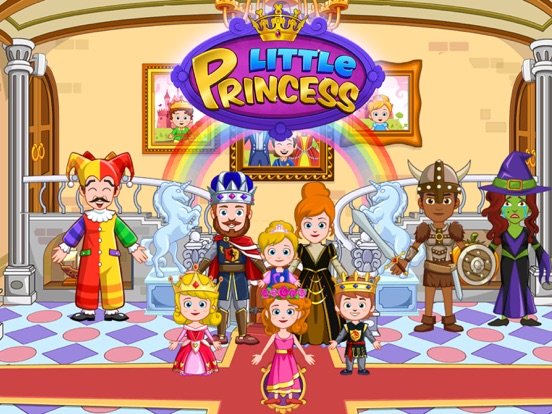
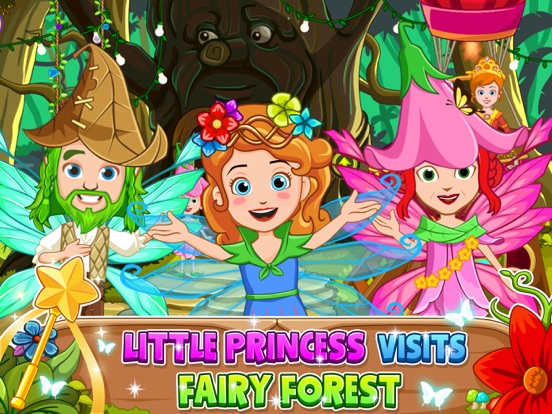
Ages 6–8. This is where "and then…" works best. At the end, write down a sentence or two in your child's own words and read it back the next day. If your child likes acting stories out on a tablet, the rooms in My Little Princess: Castle or the forest in My Little Princess: Fairy can serve as a set for your own plot.
Ages 9–12. Some older kids find "princess" too young. Let them twist it: the princess runs a detective agency, builds machines or turns down the crown. Hand them the obstacle cards and ask them to make your heroine's life difficult.
FAQ
How long should a made-up bedtime story be?
Five minutes is a good target for a bedtime story you invent together. That leaves room for a heroine, a wish, one obstacle, a helper and a calm ending. Longer stories with several obstacles fit better in the afternoon, when an exciting middle won't keep anyone awake. The five-minute target is our own editorial advice.
What if my child wants the same story every night?
Let them have it. A familiar story is easy for you to tell and can become part of the bedtime routine. To keep it fresh, change one card at a time: a new obstacle on Monday, a new helper on Tuesday. Over a week, the same story turns into a series without losing the shape your child likes.
How do I get my child to help make up a story?
Make the question smaller. Instead of "What happens next?", offer two options: "Does she knock on the door or climb through the window?" Pointing at a printed card helps, and so does letting your child voice the helper character. Some kids prefer to listen for a while before joining in, and that's fine.
What should I do if my child makes the story scary?
Don't ban the monster; change its job. Ask its name and why it's roaring, give it a problem of its own, and hand the heroine a tool like a lantern or a whistle. At bedtime, move big adventures to tomorrow's daytime story, and stop if your child looks upset rather than excited.
Do these princess story cards work for boys?
Yes. The five steps work for any hero, and your child can turn any heroine card into a prince, a knight or a talking fox. The wishes, obstacles and helpers, from a grumpy goose to a fog that hides your shoes, don't depend on who the main character is. Let your child rename anyone they like.
Do I need to print the story cards?
No. You can read them from the screen or remember a few favorites. Printing helps with younger kids, who like holding something and pointing at it. If you print, use thick paper, cut along the table lines and keep each set in its own envelope, so your child can draw one card from each.
Sources
- American Academy of Pediatrics, HealthyChildren.org: "The Power of Play: How Fun and Games Help Children Thrive," Michael Yogman, MD, FAAP, last updated 3 May 2023. https://www.healthychildren.org/English/family-life/power-of-play/Pages/The-Power-of-Play-How-Fun-and-Games-Help-Children-Thrive.aspx (checked 13 October 2026)
- American Academy of Pediatrics, HealthyChildren.org: "Brush, Book, Bed: How to Structure Your Child's Nighttime Routine," last updated 2 February 2024. https://www.healthychildren.org/English/healthy-living/oral-health/Pages/Brush-Book-Bed.aspx (checked 13 October 2026)
Need a beginning for tonight? Pick one of our five princess story starters and finish it with the five steps above. Want to build a story on screen together? Our princess story generator for kids lets your child pick the hero, a friend and a magic object, then reads the story aloud.